![Yoshida Nakiri Takefu SUJ-2 Kuro-uchi 165mm (6.5") [Magnolia] -Sharp Edge Shop Kuro uchiNakiriTakefu 030106101095](https://www.kniveshotdeal.com/wp-content/uploads/2025/11/Kuro-uchiNakiriTakefu_030106101095-100x100.webp "Yoshida Nakiri Takefu SUJ-2 Kuro-uchi 165mm (6.5\") [Magnolia] 5")

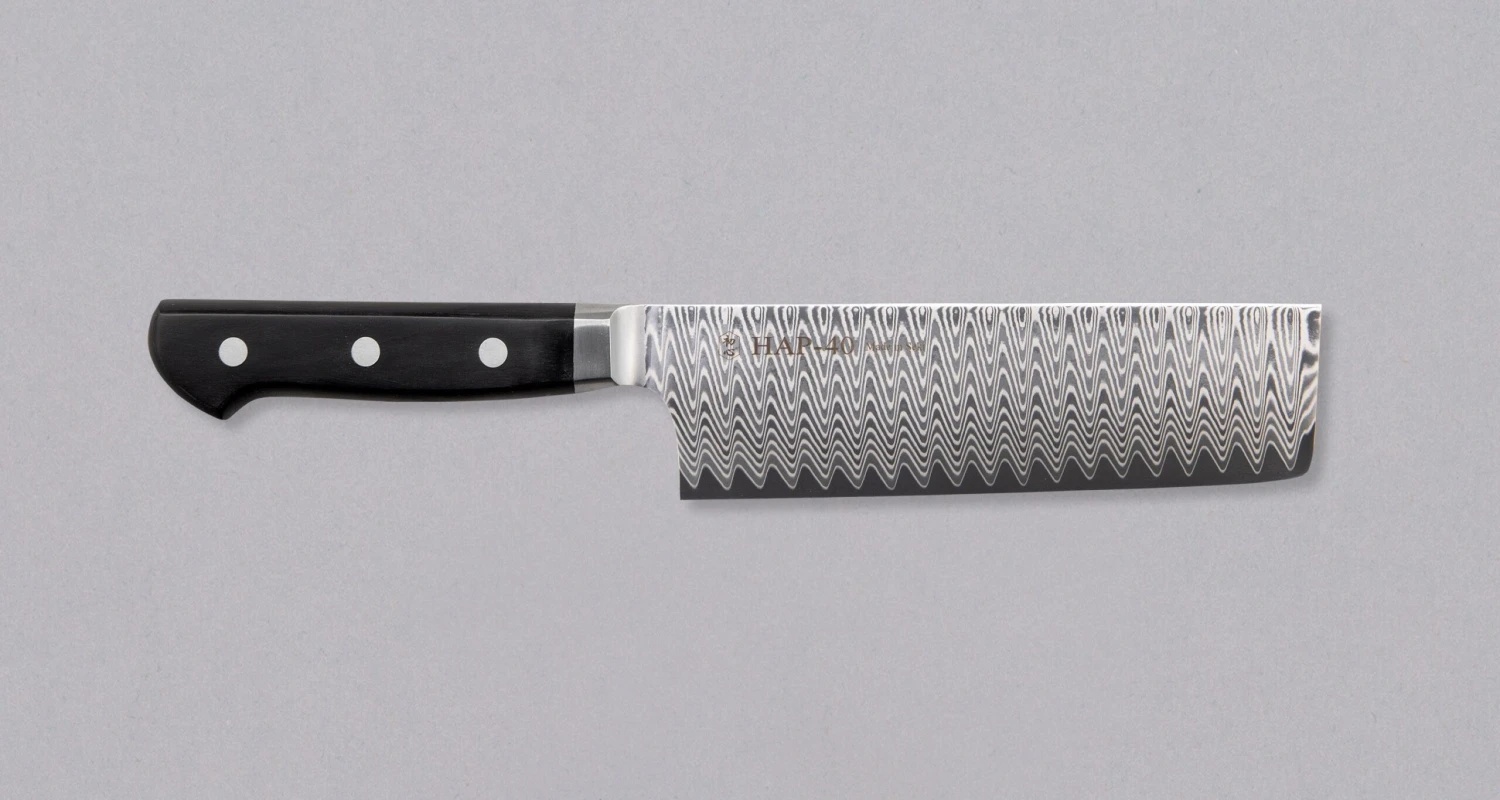
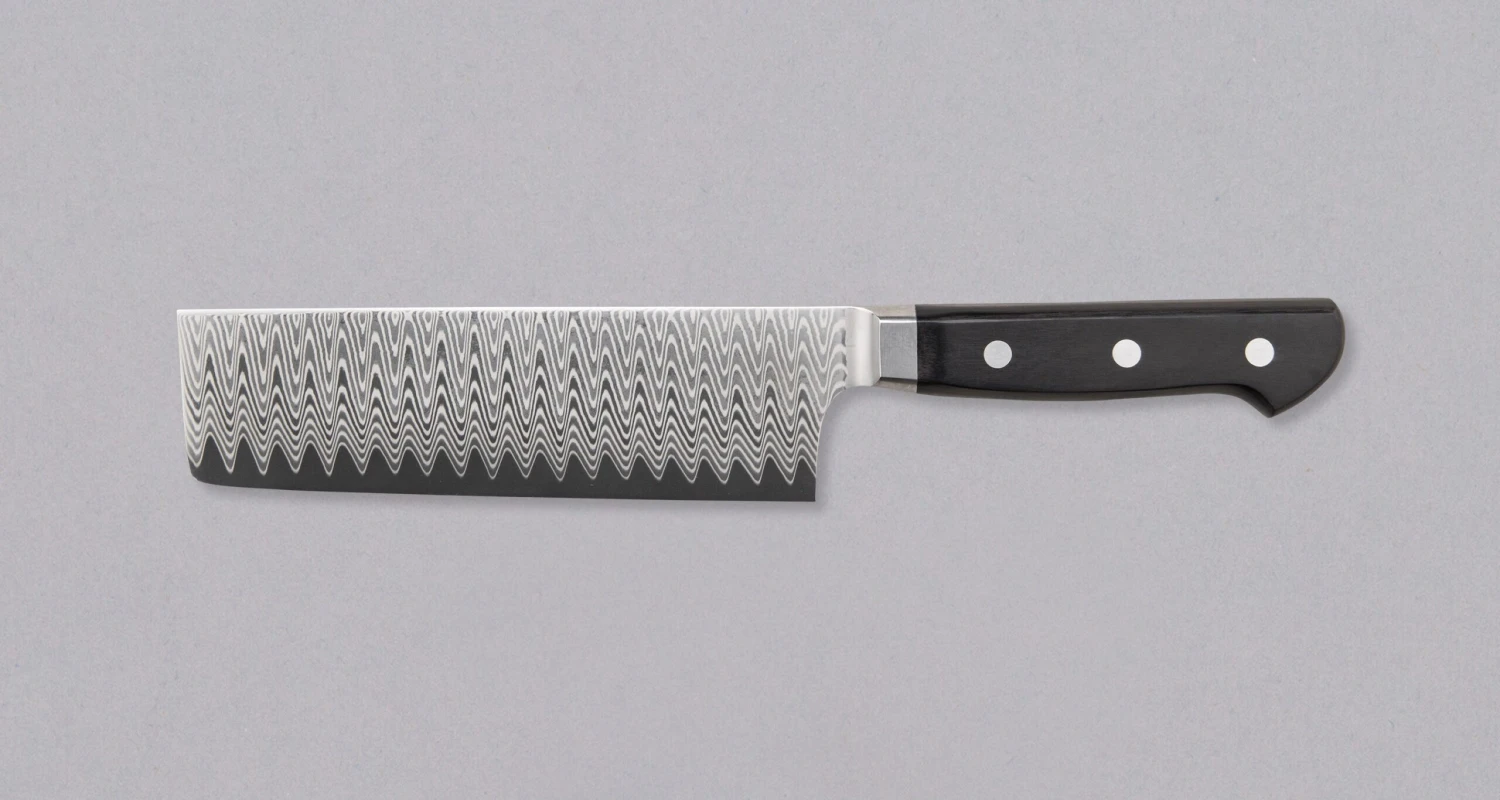
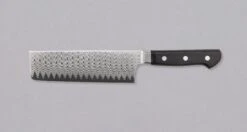
Hayabusa Nakiri HAP-40 Damascus 160mm is a Japanese kitchen knife, suited for preparing vegetables. It’s a nonconformist piece that just screams futurism. Featuring a classic western style handle and a brazen look, it’s quite a unique knife. The wavy damascus curves on the blade are sharp and steep, reminiscent of high-frequency waves and synchronous with up-and-down chopping motions.
Made from HAP-40 steel, which is one of the most technologically advanced steels renowned for its extreme hardness, excellent sharpness and edge retention it provides to the knives. If you’re not a fan of sharpening your knives, this one is for you, as you really won’t have to do it often.
| Fun fact: Hayabusa nakiri shares its name with the peregrine falcon (ハヤブサ), the fastest member of the animal kingdom. This knife may not reach speeds upwards of 350 km/h, but chopping with it will feel just as fast. |
BLADE SHAPE:
The nakiri shape was designed for cutting vegetables. Nakiri aka Nakiri Bocho is a traditional Japanese knife with a square, thin blade and a deep, flat belly. Since the entire flat edge of the knife touches the cutting board at once, in one clean, vertical movement, there is no need for a horizontal pull or push. This also means that you won’t be turning the vegetable into an “accordion” of pieces still clinging together by a thread.
STEEL:
This knife’s hard core is made of a somewhat exotic and currently one of the most mysterious and attractive steels produced in Japan (at least as far as kitchen knives are concerned): Hitachi’s HAP-40 steel that fits into the category of modern and technologically advanced steels. HAP-40 is fine-grained enough to sharpen very well, and knives from this steel keep their sharpness 3-5 times longer than traditional knives. An interesting fact is that, considering it is a powder steel, it has an extremely small content of chromium (around 4%) and can react as a high-carbon steel in specific circumstances.
LAMINATION:
The core layer consisting of the hard HAP-40 steel was sandwiched between two sheets of softer damascus pattern steel. This technique is called san-mai and is used to protect the hard (but delicate) core from outside factors and physical impacts, which could lead to breakage.
GEOMETRY:
It has a double bevel (symmetrical) blade.
BLADE FINISH:
The blade has a unique damascus finish with sharp and steep curves that give the knife a futuristic appearance. The clad line is interesting as well, with consistent curves that aren’t frequently seen on Japanese knives.
HANDLE:
Classic western (Yo) style handle made from black micarta.
Be the first to review “Hayabusa Nakiri HAP-40 Damascus 160mm (6.3″)”
Related products
Japanese Knives
Japanese Knives
Deba [Deboning & Filleting]
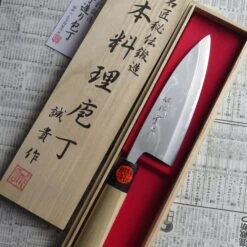
Deba [Deboning & Filleting]
![Tsunehisa Gyuto Aogami Super Kuro-uchi 210mm (8.3") [Rosewood-Cedar]](https://www.kniveshotdeal.com/wp-content/uploads/2025/11/410103111038-_1__rosewood-247x132.webp)
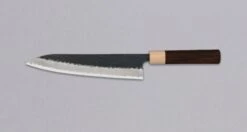
Gyuto [Chef's knife]
Tsunehisa Gyuto Aogami Super Kuro-uchi 210mm (8.3″) [Rosewood-Cedar]
Gyuto [Chef's knife]
Gyuto [Chef's knife]
Japanese Knives
Reviews
There are no reviews yet.